
Rainwater Infiltration Detection Service Using AI Acoustic Analysis
Sewerage systems fall into two categories: combined sewer systems, which carry both wastewater and stormwater in the same pipe, and separate sewer systems, which convey them in separate pipes. Combined systems predominate in major cities, while systems built after the 1970s are mostly separate. In a separate sewer system, stormwater and wastewater are in dedicated pipes, so stormwater should never enter the sanitary sewer. However, groundwater can infiltrate through cracks caused by the aging of sewer pipes, and rainwater from household downspouts can be misconnected to the sanitary sewer instead of the storm drain. This rainwater inflow and infiltration (I/I) into the sanitary sewer occurs after rainfall events, and because the entry points are difficult to locate, it is also referred to as unaccounted-for water. Unlike normal wastewater, this rainwater infiltration cannot be charged to users, placing an annual burden of ¥10.4 billion on municipalities across Japan and straining their sewerage operations.
Conventionally, to identify the entry points of rainwater infiltration, workers would descend into manholes and install flowmeters inside the sewer pipes, then check whether the wastewater volume increased after rainfall. However, installing flowmeters is labour-intensive and expensive, and municipalities’ limited budgets have made it impossible to survey a sufficient number of locations. In response, AIST and CTI Engineering Co., Ltd. developed a low-cost method that places commercially available IC recorders just below manhole covers from above ground, captures the acoustics inside the manhole, and detects the presence of rainwater infiltration through AI acoustic analysis.
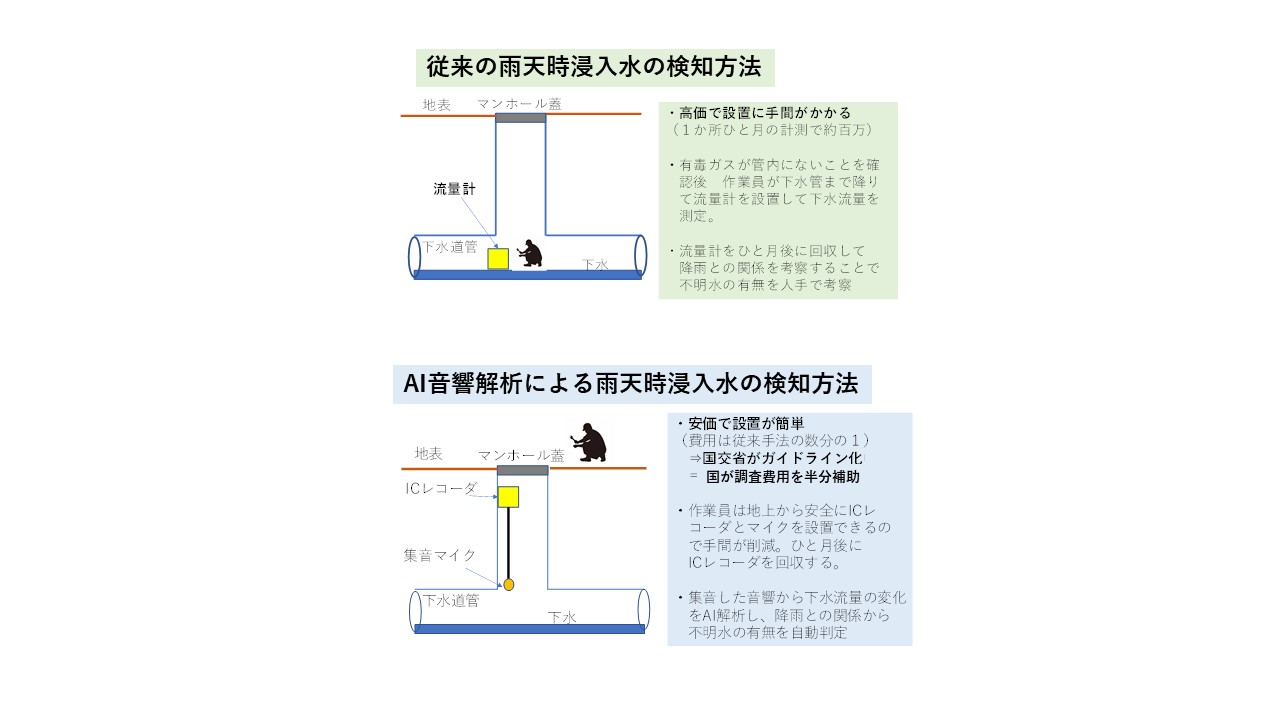
Figure: Comparison of unaccounted-for water detection methods
Furthermore, following verification through the Ministry of Land, Infrastructure, Transport and Tourism’s B-DASH Project, the method was incorporated into official guidelines in April 2021. Our company has been offering this AI acoustic analysis service for rainwater infiltration detection since August 2020.
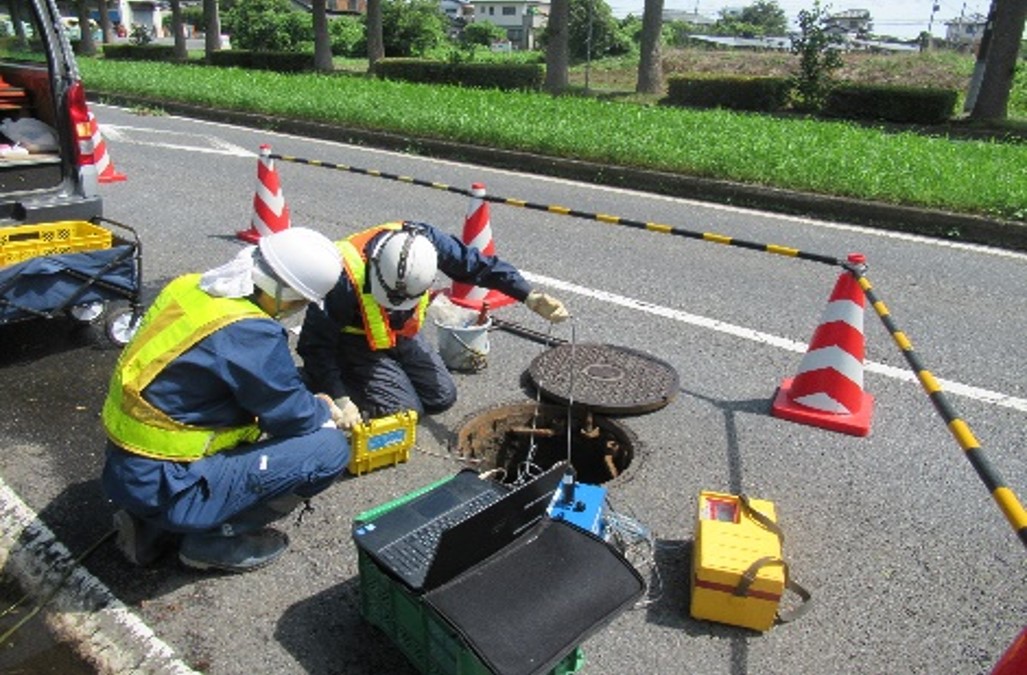
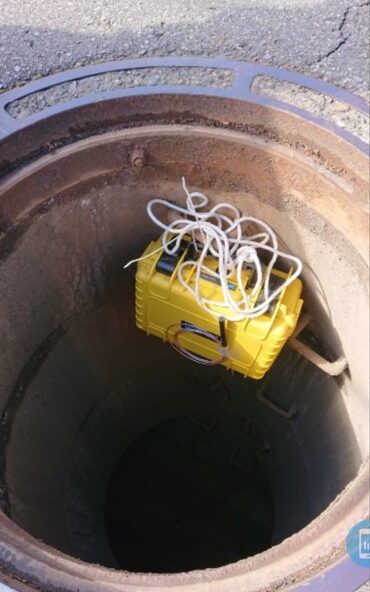
Photo: Installation work and acoustic data acquisition device